A capacitor stores an electrical charge and delivers it to start and keep the compressor and fan motors running. It is a small component, but it is also one of the more frequent points of failure in residential air conditioning systems, particularly after sustained summer heat.
Capacitor failure often produces a very specific symptom: the outdoor unit hums but the fan does not spin, or the compressor attempts to start and then shuts off repeatedly. Testing the capacitance against the rating on the case, using a meter, confirms whether it has weakened beyond tolerance.
Signs that may point to AC Capacitor Repair
- The outdoor unit hums but the fan blade does not turn
- The system starts and then shuts off again within a few seconds
- The condenser fan spins slowly or needs a push to start
- A clicking sound repeats at the outdoor unit without the system starting
- The capacitor case appears swollen, bulged, or leaking oily residue
Common causes of ac capacitor repair issues in Port St. Lucie
- Heat-related aging
- Capacitors are rated for a service life that shortens with sustained high temperatures. Outdoor units in Port St. Lucie routinely operate in ambient temperatures above 90 degrees for months at a time, which accelerates this wear.
- Voltage fluctuations and surges
- Utility voltage spikes and lightning-related surges, both common during Florida storm season, can stress and weaken a capacitor even when it does not fail outright immediately.
- Manufacturing tolerance and age
- Capacitors have a microfarad rating with an allowable tolerance range. As a unit ages, its measured capacitance can drift outside that range even without an obvious external sign of damage.
- Dual capacitor cross-loading
- Many residential units use a dual capacitor serving both the compressor and the fan motor. When one side weakens, it can affect the performance of both connected motors.
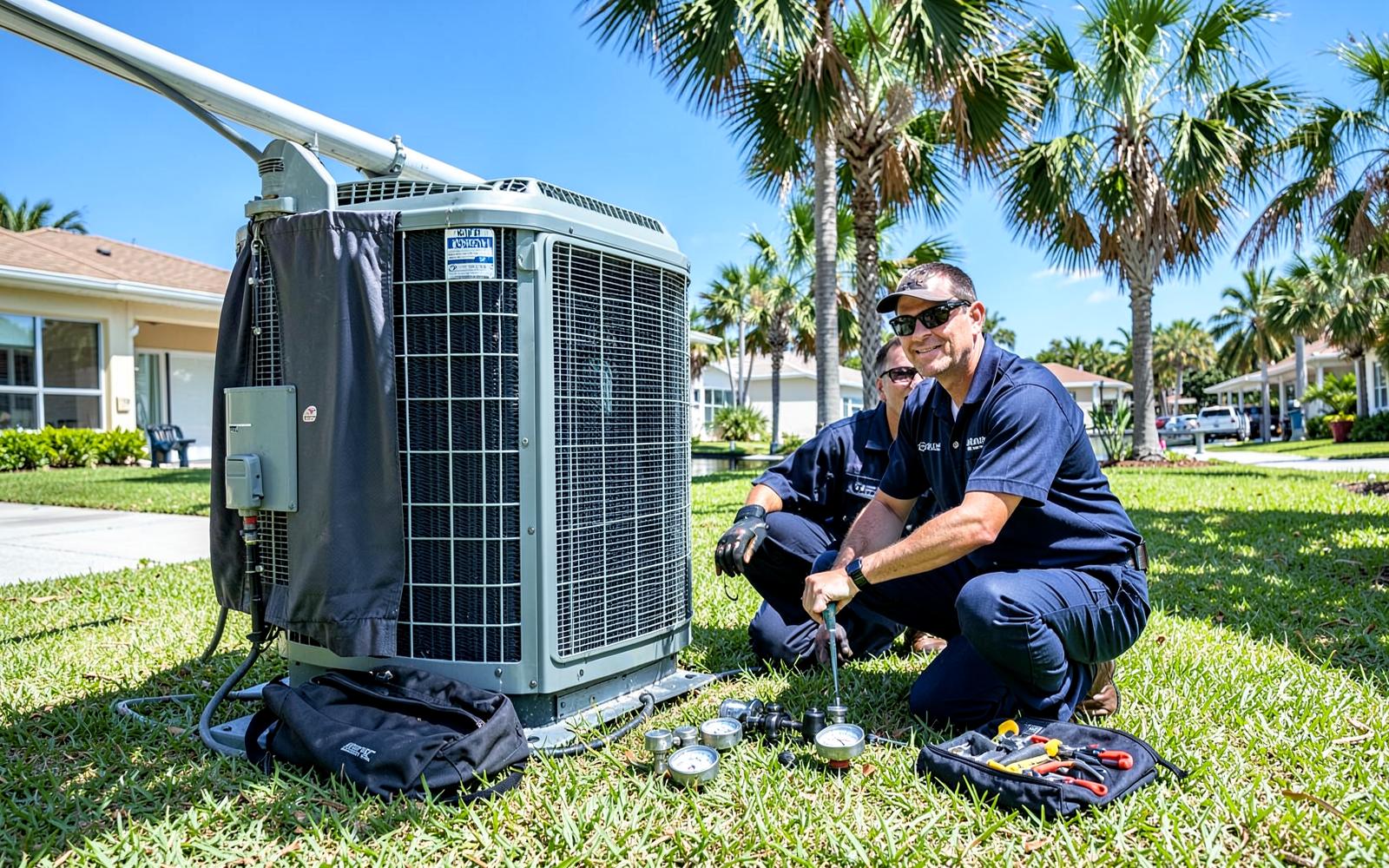
What a service visit generally involves
- 1
Visual inspection
The capacitor case is checked for bulging, venting, or leaking, which are physical signs of failure that can sometimes be identified before electrical testing.
- 2
Capacitance measurement
With power safely disconnected, the capacitor is measured with a meter and compared against its rated microfarad value and tolerance.
- 3
Motor and circuit check
Compressor and fan motor amperage are checked to confirm the capacitor is the cause rather than a symptom of a failing motor.
- 4
Replacement and verification
A replacement capacitor matched to the motor specifications is installed, and the system is run through a start cycle to confirm normal operation.
Safe checks a homeowner can make first
- Note whether the outdoor fan is humming without turning, since this detail helps with diagnosis
- Confirm the outdoor disconnect and breaker are in the on position
- Listen for repeated clicking at the outdoor unit and report the pattern when requesting service
Internal coil cleaning, electrical work, refrigerant work, and panel removal should be left to qualified service personnel.
When to stop running the system
- Do not open the outdoor unit's electrical panel or attempt to test or discharge a capacitor, since it can hold a stored electrical charge even when the system is powered off
- If the fan blade is visibly stuck or not turning, leave the system off rather than trying to spin it manually
Areas covered in Port St. Lucie
AC Capacitor Repair information and service requests cover Port St. Lucie and the areas listed below: