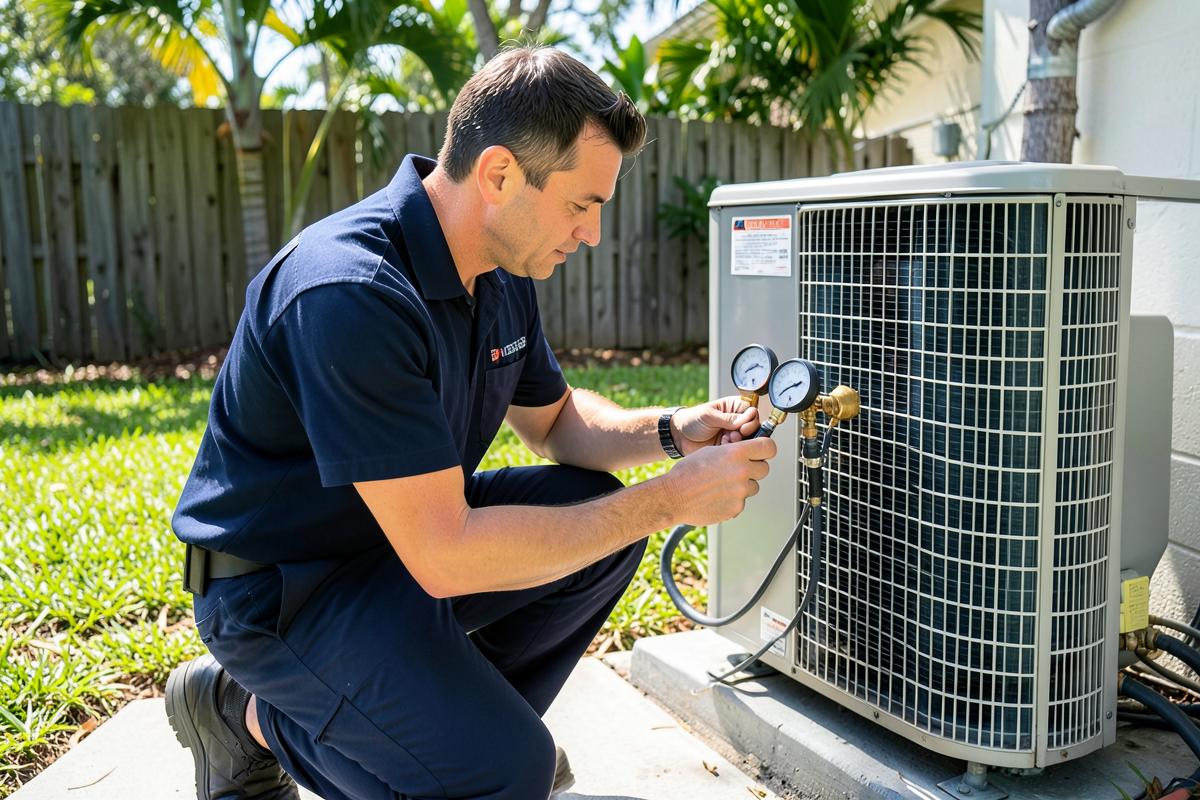
A system that runs without cooling is different from a system that will not start. The equipment has power and the fan moves air, but the air leaving the vents is not meaningfully colder than the air entering the return.
The measurement that helps separate the causes is the temperature split between return and supply air. A healthy split in Florida conditions is roughly 16 to 22 degrees. A narrow split points to charge or compressor issues; a wide split with weak airflow points to a restriction.
Signs that may point to AC Not Cooling
- The thermostat never reaches its set point on hot afternoons
- Air from the vents feels cool but not cold
- The system runs almost constantly
- The house feels humid even when the temperature is acceptable
- One end of the home is noticeably warmer
Common causes of ac not cooling issues in Port St. Lucie
- Low charge from a refrigerant leak
- A frequent cause of reduced capacity. Pressures and superheat or subcooling can identify it, and the leak is located before recharging.
- Dirty condenser coil
- Airborne salt, lawn clippings, and dust can insulate the outdoor coil so heat cannot be rejected efficiently, which raises pressures and lowers capacity.
- Frozen evaporator coil
- Restricted airflow or low charge can drop coil temperature below freezing, and the resulting ice blocks airflow completely.
- Failing compressor valves
- A compressor that runs but no longer pumps effectively can produce near-normal electrical readings with poor pressure differential.
- Undersized or leaking ducts
- Attic ductwork in Port St. Lucie homes runs through very hot space. Leaks there pull in hot attic air and waste a significant share of capacity.
What a service visit generally involves
- 1
Measure the temperature split
Return and supply temperatures establish whether the problem is capacity or distribution.
- 2
Check airflow
Filter, blower speed, coil cleanliness, and static pressure are checked before any refrigerant work.
- 3
Verify charge and compressor performance
Pressures, superheat, and subcooling are compared to manufacturer targets for the current outdoor conditions.
- 4
Report and repair
The measured cause is typically explained along with the options for correcting it.
Safe checks a homeowner can make first
- Check and replace a dirty air filter
- Confirm supply vents are open and not blocked by furniture
- Note whether the issue is worse in the afternoon versus overnight
Internal coil cleaning, electrical work, refrigerant work, and panel removal should be left to qualified service personnel.
When to stop running the system
- If ice is visible on the indoor coil or refrigerant lines, turn the system off and let it thaw fully before further use
Areas covered in Port St. Lucie
AC Not Cooling information and service requests cover Port St. Lucie and the areas listed below: