
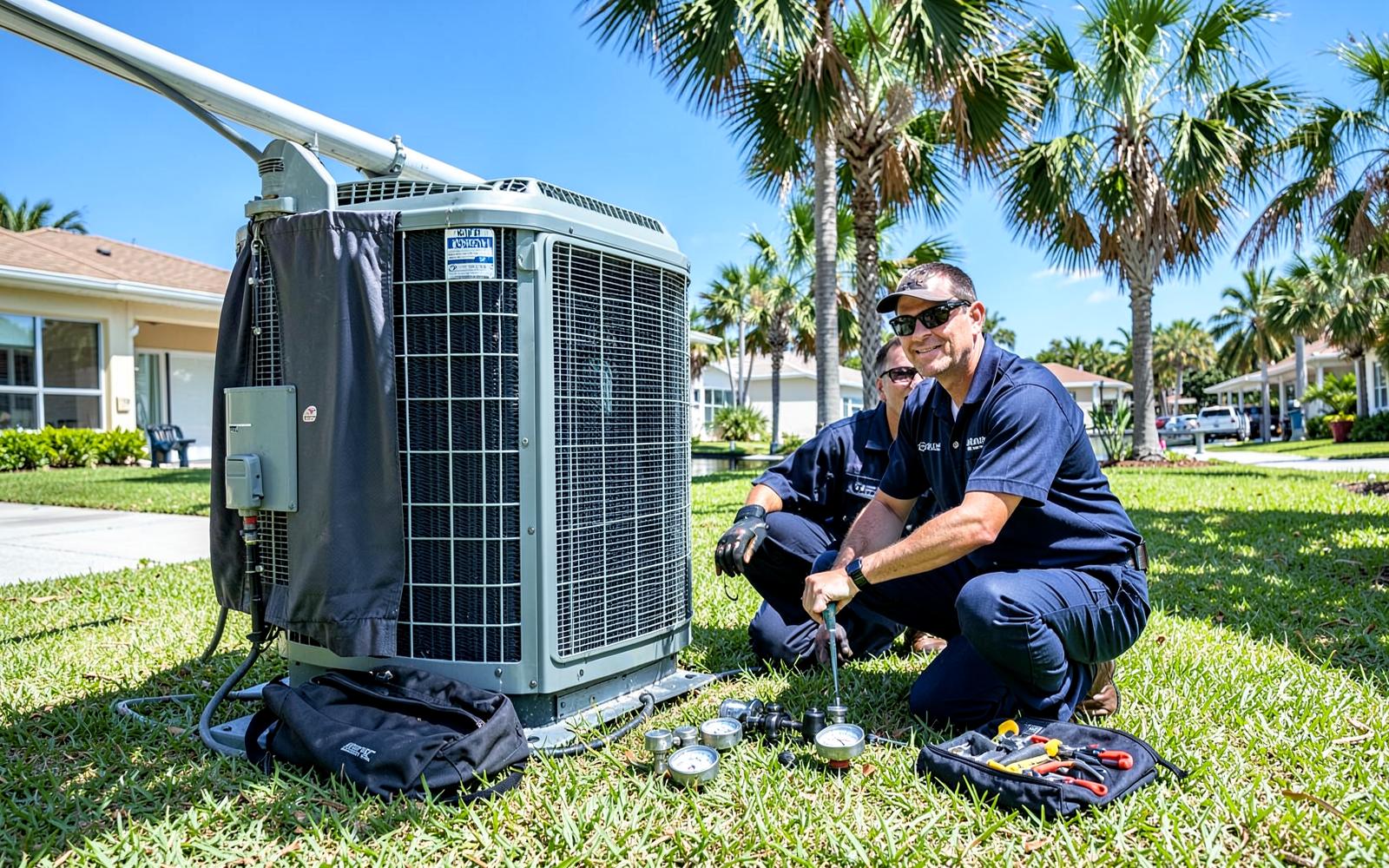
Torino is an established residential area in northwestern Port St. Lucie, centered on the North Torino Parkway corridor and convenient to St. Lucie West and I-95. The neighborhood mixes older platted homes from the 1980s and 1990s with newer infill construction built on previously vacant lots, which means the area has both modern, higher-efficiency systems and equipment well past 15 years old within the same few blocks.
AC repair information and service requests cover Port St. Lucie and the areas listed below, including Torino. Infill homes built on formerly vacant lots often have limited mature shade compared with older lots that have had decades for landscaping to grow in, which raises the afternoon heat load on both the roof and the outdoor condenser in those newer homes.
Because Torino developed in stages over several decades rather than all at once, equipment condition varies significantly from one property to the next even along the same street. A home built in the late 1980s may still have components approaching the end of a normal service life, while a recently built infill home nearby could have a system installed within the last few years.
Housing in Torino
A mix of 1980s and 1990s single-family homes alongside newer infill construction.
Torino's older housing stock follows typical construction methods from the 1980s and 1990s, generally with block construction, moderate attic insulation, and ductwork sized to the standards of that period. Newer infill homes built on remaining vacant parcels tend to follow current energy codes, which improves envelope tightness but places more importance on correctly sized equipment.
Because North Torino Parkway serves as the neighborhood's main corridor, homes closer to this route and to the St. Lucie West interchange tend to be part of the more established sections, while pockets further from the corridor include more recent infill construction. Homeowners evaluating a cooling system in Torino should account for their specific home's construction era rather than assuming a single equipment profile applies across the neighborhood.
Cooling considerations specific to Torino
- Older 1980s and 1990s homes commonly have undersized return air paths relative to current airflow standards
- Limited mature tree cover on newer infill lots raises solar gain on both roofs and outdoor condensers
- Aging line set insulation is common on original installations from the neighborhood's earlier construction era
- Equipment age varies significantly between original and replacement systems across different blocks
- Proximity to I-95 and St. Lucie West means many Torino homes are within a similar service radius to nearby master-planned communities
Common AC problems that may occur in Torino
- Reduced airflow in older homes with undersized returns
- Homes built to 1980s and 1990s standards sometimes have return air ducts that are smaller than what current equipment is designed to work with, which can restrict airflow and reduce system efficiency.
- Condenser heat load on newer infill lots
- Infill homes without established shade trees can expose the outdoor unit to more direct afternoon sun than older, more landscaped properties nearby, which may reduce cooling capacity during peak heat.
- Aging line set insulation causing efficiency loss
- On older installations, insulation around the refrigerant line set connecting the indoor and outdoor units can degrade over time, which may reduce system efficiency and, in some cases, cause condensation issues.
- Inconsistent equipment condition from home to home
- Because Torino combines different construction eras, two neighboring homes may have very different equipment ages, meaning symptoms and appropriate fixes can differ significantly even for similar complaints.
Safe checks before requesting service
- Verify thermostat settings and replace batteries if the display is dim or unresponsive
- Check and replace the air filter, particularly in older homes where restricted airflow is more common
- Inspect supply vents throughout the home to confirm they are open and unobstructed
- Look at the outdoor unit for direct, unshaded sun exposure and clear any nearby debris or landscaping buildup
- Check the condensate drain outlet near the outdoor unit for unusual dripping, which can indicate a clog
- Reset a single tripped breaker one time; if it trips again, avoid repeated resets and seek an inspection
Internal coil cleaning, electrical work, refrigerant work, and panel removal should be left to qualified service personnel.
Repair and maintenance considerations
Given the range of construction eras in Torino, whether a repair or a broader system evaluation makes more sense often depends heavily on the specific home's age rather than a general neighborhood pattern. Older homes nearing or past a typical 15- to 18-year equipment lifespan are more likely to benefit from a full system evaluation when a significant repair is needed, while newer infill homes with recently installed equipment are usually better candidates for a targeted repair.
Direct sun exposure raises the temperature of air entering the outdoor coil, which increases head pressure and can lower a system's effective capacity. Shade that does not restrict airflow around the unit can help on newer, less-landscaped lots, though adequate clearance around the condenser generally matters more for performance than shade alone.
Landmarks and corridors in Torino
Local reference points include North Torino Parkway, Crosstown Parkway corridor, Torino Regional Park.
Nearby areas
AC repair services relevant to Torino
- AC Repair
- Emergency AC Repair
- AC Not Cooling
- AC Maintenance and Tune-Ups
- Refrigerant Leak Repair
- Air Handler and Blower Repair
- Thermostat Repair and Installation
- Condenser and Coil Cleaning
- Ductwork and Airflow Repair
- AC Replacement and Installation
- AC Capacitor Repair
- AC Compressor Repair
- AC Drain Line Repair
- Frozen AC Repair