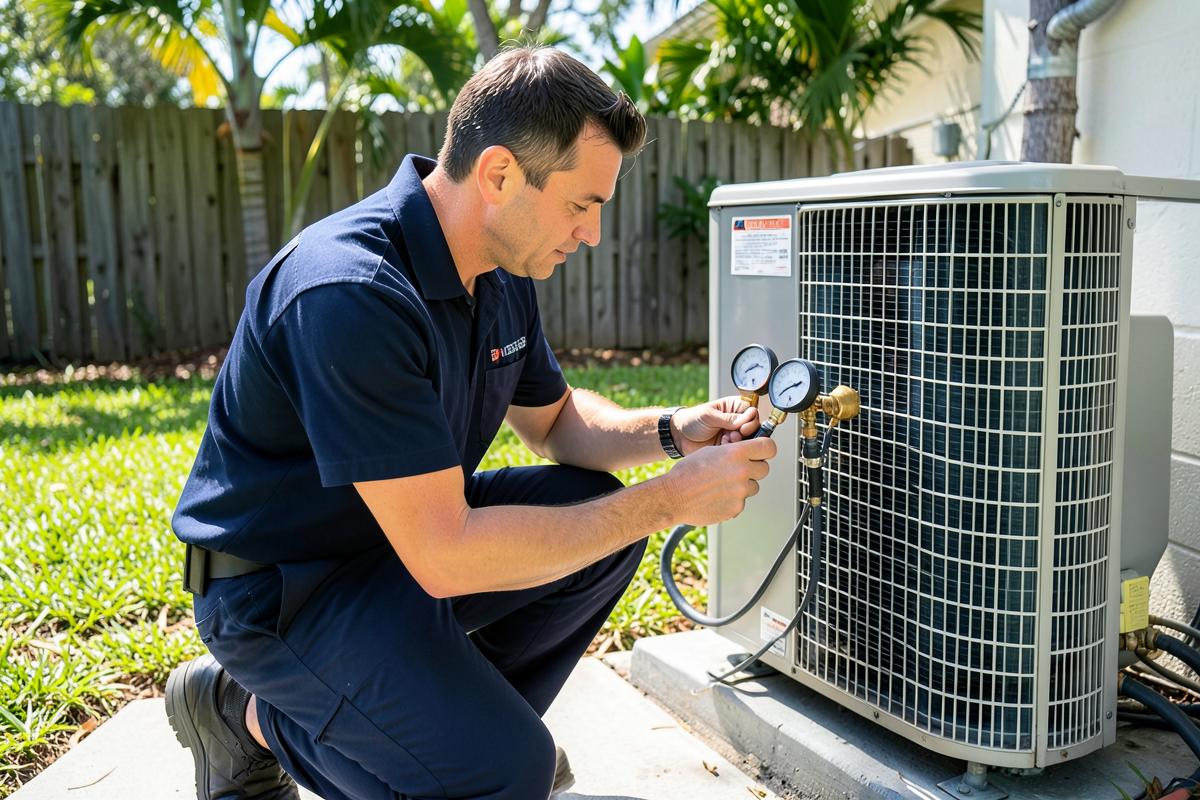
Refrigerant circulates in a sealed loop and is not consumed during normal operation. If a system is low, there is a leak somewhere in the circuit. Repeated top-ups without repair can be costly and, for older refrigerants, are subject to environmental regulation.
Leak work generally has three parts: finding the leak, repairing or replacing the failed component, and recharging to the manufacturer's weighed-in charge rather than by pressure alone.
Signs that may point to Refrigerant Leak Repair
- Cooling capacity has dropped gradually over a season
- Ice forms on the copper line or the indoor coil
- A hissing or bubbling sound near the indoor unit
- The system was recharged before and is low again
- Longer run times with rising electricity use
Common causes of refrigerant leak repair issues in Port St. Lucie
- Formicary corrosion in evaporator coils
- Microscopic pinholes can form in copper tubing from indoor chemical exposure. This is a leading cause of coil leaks and is not repairable at the tube level.
- Vibration fatigue at joints
- Years of compressor vibration can crack brazed joints and flare fittings, most often near the outdoor unit.
- Line set damage
- Landscaping work, corrosion where the line set passes through a wall, and physical impact can all open the circuit.
- Schrader valve and cap leaks
- Service port valve cores are a small and often overlooked leak source that a pressure test can reveal.
What a service visit generally involves
- 1
Confirm the system is actually low
Pressures, superheat, and subcooling establish the charge condition before any leak search begins.
- 2
Locate the leak
Electronic detection, bubble solution, and where necessary nitrogen pressure testing help narrow the location.
- 3
Repair or replace
Joints are typically repaired; corroded coils are typically replaced. The option and cost are usually presented before work proceeds.
- 4
Evacuate and weigh in charge
The system is evacuated to remove moisture and non-condensables, then charged to the nameplate weight and verified.
Safe checks a homeowner can make first
- Note when reduced cooling was first noticed and whether it has been gradual or sudden
- Check the filter, since restricted airflow can mimic some low-charge symptoms
Internal coil cleaning, electrical work, refrigerant work, and panel removal should be left to qualified service personnel.
When to stop running the system
- Do not attempt to access refrigerant lines, valves, or fittings, since refrigerant handling requires licensed equipment and training
- If ice is visible on the lines, turn the system off and allow it to thaw before further diagnosis
Areas covered in Port St. Lucie
Refrigerant Leak Repair information and service requests cover Port St. Lucie and the areas listed below: