Tradition is one of the newer large master-planned developments in Port St. Lucie, built mostly from the mid-2000s through the present. It includes Tradition Square, a growing medical and retail district, and several 55-plus communities alongside conventional single-family neighborhoods. Because construction has been fairly continuous, homes range from early-phase houses with original 2000s-era equipment to recently completed builds with current-generation systems.
AC repair information and service requests cover Port St. Lucie and the areas listed below, including Tradition. The area's newer construction techniques generally produce a tighter building envelope than older Port St. Lucie housing stock, which helps with energy use but also changes how a cooling system needs to be sized and run to control indoor humidity.
As the earliest phases of Tradition approach the 15- to 20-year mark, original builder-installed condensers, air handlers, and their electrical components (capacitors, contactors, control boards) are reaching the age range where component failures become more common. Homeowners in these older sections of Tradition are more likely to encounter age-related repair needs than those in the newest subdivisions.
Housing in Tradition
Single-family homes, villas, and 55-plus community residences built largely between 2005 and the present.
Housing in Tradition spans conventional single-family subdivisions, attached villas, and age-restricted communities marketed toward retirees. Lot sizes tend to be moderate, and many streets were laid out with underground utilities and consistent setback rules, which generally keeps outdoor condensers in similarly sized side or rear pads across a given phase of construction.
Because the development happened in stages, equipment age tracks fairly closely with which phase of Tradition a home sits in. Homes near the original Tradition Square core are more likely to have older, first-generation HVAC equipment, while homes in the newer sections toward the western and southern edges of the development typically have more recent systems still within or near their original manufacturer warranty period.
Cooling considerations specific to Tradition
- Builder-grade equipment from the first construction phase is now old enough that age-related component failure becomes more likely
- Tight, newer building envelopes can cause an oversized system to short cycle, which leaves indoor humidity higher than expected
- Long attic duct runs in single-story floor plans can lose efficiency if seams or connections were not sealed well during construction
- West-facing living areas and lanais carry a heavy afternoon solar load in the summer months
- Some 55-plus sections have HOA rules governing outdoor equipment placement and screening
Common AC problems that may occur in Tradition
- Weak cooling despite the thermostat reaching its setpoint
- A system that reaches the set temperature but leaves the home feeling humid or clammy may be short cycling, a pattern more likely when equipment was sized for square footage rather than a proper load calculation. This can occur more often in Tradition's tighter, newer-construction homes.
- Reduced airflow from vents
- A dirty air filter, a blocked return grille, or closed supply dampers can all reduce airflow. In homes with long attic duct runs, a disconnected or crushed duct section is also possible and may require inspection.
- Aging capacitors or contactors
- Homes in the earliest phases of Tradition are now old enough that original electrical components inside the outdoor unit can wear out, which may cause the compressor or fan to hesitate on startup or fail to run at all.
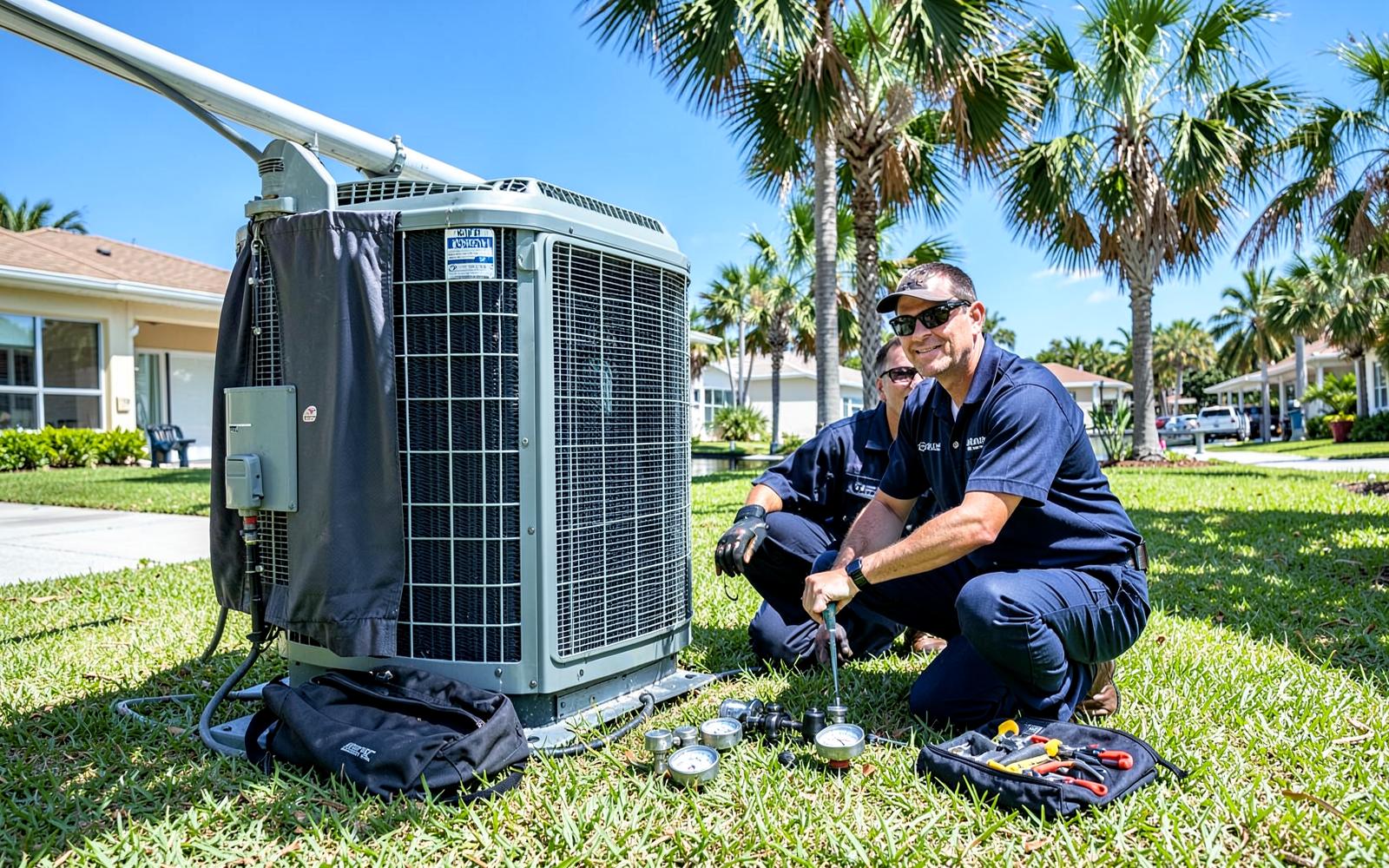
- Condenser struggling in direct afternoon sun
- Outdoor units on west-facing pads without any shade can run at higher pressures during peak afternoon heat, which may reduce cooling capacity on the hottest days.
Safe checks before requesting service
- Confirm the thermostat is set to Cool with a target temperature below the current room temperature, and check that batteries or backup power are not low
- Replace or clean the air filter if it has not been changed in the last one to three months
- Check that furniture, rugs, or curtains are not blocking supply or return vents
- Look at the outdoor condensate drain line outlet near the unit for dripping water, which can indicate a clogged drain
- Reset a single tripped breaker at the panel one time only; if it trips again, leave it off and seek a professional inspection
- Walk around the outdoor unit and clear leaves, mulch, or landscaping debris that may be restricting airflow
Internal coil cleaning, electrical work, refrigerant work, and panel removal should be left to qualified service personnel.
Repair and maintenance considerations
Because a meaningful share of Tradition's HVAC equipment was installed within the same few years during each construction phase, homes in older sections often reach common failure points around the same time as their neighbors. Recognizing whether a system is nearing that age range can help a homeowner decide between a targeted repair and planning for eventual replacement.
Routine maintenance, such as periodic filter changes, coil cleaning, and an annual professional inspection of electrical connections and refrigerant charge, tends to catch small issues before they become failures. In newer-construction homes with tighter envelopes, maintenance that confirms correct airflow and humidity control is especially relevant, since a system that is technically working can still leave a home feeling clammy if airflow or staging is off.
Landmarks and corridors in Tradition
Local reference points include Tradition Square, Tradition Field area, Village Parkway corridor.
Nearby areas
AC repair services relevant to Tradition
- AC Repair
- Emergency AC Repair
- AC Not Cooling
- AC Maintenance and Tune-Ups
- Refrigerant Leak Repair
- Air Handler and Blower Repair
- Thermostat Repair and Installation
- Condenser and Coil Cleaning
- Ductwork and Airflow Repair
- AC Replacement and Installation
- AC Capacitor Repair
- AC Compressor Repair
- AC Drain Line Repair
- Frozen AC Repair