
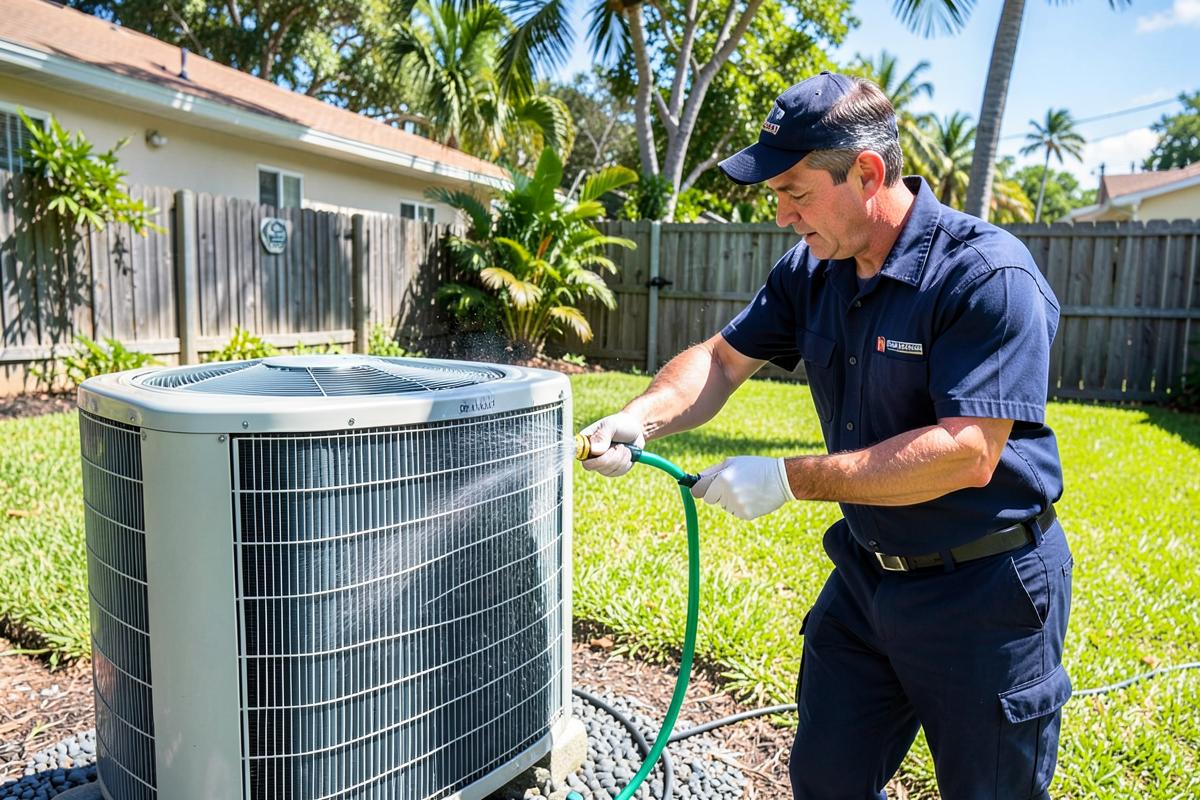
Coils transfer heat, and anything coating them blocks that transfer. In Port St. Lucie the outdoor coil faces airborne salt near waterways, lawn clippings, and pollen, while the indoor coil collects whatever passes through the filter.
Coil cleaning restores capacity that has been lost gradually. Because the loss is gradual, many homeowners do not notice it until the system can no longer keep up on the hottest afternoons.
Signs that may point to Condenser and Coil Cleaning
- The outdoor unit fins look grey, matted, or greasy
- The condenser runs hotter and louder than it used to
- Cooling capacity has fallen across the season
- The evaporator coil freezes periodically
- Musty odor when the system starts a cycle
Common causes of condenser and coil cleaning issues in Port St. Lucie
- Coastal air exposure
- Outdoor equipment closer to waterways and coastal air can experience additional corrosion and can build a salt film that insulates the fin surface.
- Lawn and landscape debris
- Grass clippings, mulch, and shrubs planted too close can block airflow through the coil face.
- Bypassed filtration
- Gaps around the filter can let unfiltered air reach the evaporator, where dust bonds to the wet coil surface.
- Biological growth on the wet coil
- Constant condensation in a humid climate can support growth that both restricts airflow and produces odor.
What a service visit generally involves
- 1
Assess fin condition
Fin damage and corrosion are noted before cleaning, since bent fins need combing rather than pressure.
- 2
Apply appropriate cleaner
A coil-safe cleaner is typically used at the correct dilution, avoiding high-pressure water that can flatten fins.
- 3
Rinse and clear
Coils are rinsed from the inside out where accessible so debris is pushed out rather than deeper in.
- 4
Verify improvement
Pressures and temperature split are typically measured before and after so any gain can be documented.
Safe checks a homeowner can make first
- Gently rinse the exterior fins of the outdoor unit with a garden hose, with power off at the disconnect, without opening the cabinet
- Clear vegetation and debris at least two feet from the outdoor unit
- Check and replace the indoor air filter regularly
Internal coil cleaning, electrical work, refrigerant work, and panel removal should be left to qualified service personnel.
When to stop running the system
- Avoid pressure washers on coil fins, since they can bend fins and drive debris deeper into the coil
- Do not open the outdoor unit cabinet to access the coil directly
Areas covered in Port St. Lucie
Condenser and Coil Cleaning information and service requests cover Port St. Lucie and the areas listed below: